When I was building our registry, I made the mistake of starting with a singleton registry template and just duplicating everything. Two bouncy seats, two swings, two nursing pillows, two of this, two of that. It seemed logical. Two babies, two of everything.
It is not that simple. Some things you genuinely need two of. Some things you only need one. Some things you need way more than two. And some things on every popular registry list you will never touch.
Here is how to think through it before you start scanning things at the store.
The Core Difference with Twins
With one baby, you do not think much about quantity. You put something on the list, you get one. With twins, every item has a real question attached to it: do you need two of these at the same time, at the same developmental stage, in the same place?
The answer is almost never “just multiply by two and move on.”
Some gear you need two of because two babies will need it simultaneously and there is no way around that. Some gear you only need one of because babies do not actually need it at the same moment or you can move it between them. And some baby gear exists in a category I think of as aspirational parenting equipment: it sounds like something you will use and then sits in the corner while you do whatever actually works.
Twins force you to figure out which category everything falls into before you buy it, not after.
Always Two: The Non-Negotiables
Car seats. Two car seats is not a question. You need one per baby from the moment you leave the hospital. This is also the item where I would say spend whatever you can reasonably afford, because you will use it constantly and it matters. Just do not register for a specific model without checking whether it fits your actual car and whether two of them fit in the back row side by side. This is worth testing before you commit. Not all car seats that work fine for one baby in a given car work fine for two.
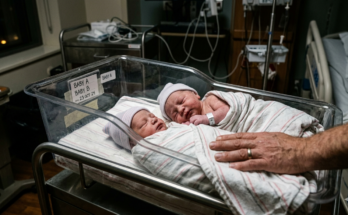
Sleep surfaces. Whether you start with bassinets, cribs, or a play yard with newborn inserts, you need two separate sleep surfaces. The American Academy of Pediatrics is explicit about this: any potential benefits of co-bedding twins are outweighed by the risks, and separate sleep surfaces are recommended from day one, both in the hospital and at home. Babies should not share a sleep surface, and that guidance does not have an exception for twins who came in together.
Some parents start with two bassinets bedside and transition to two cribs. Others go straight to two cribs. A small number of parents with very tight square footage use one crib at first when the babies are small and transition quickly, but two sleep surfaces is the goal. What you choose depends on your space and your setup. Plan for two of whatever you decide on.
Bouncers or rockers. This one is optional in theory. In practice, if you have a baby who needs to be put down somewhere that is not flat and you have two babies, you will want two bouncers. Being able to set them both down at the same time is the difference between getting something done and getting nothing done. Register for two.
Twin-Specific Gear You Would Not Think to Register for Otherwise
A tandem nursing pillow. If you plan to breastfeed and want the option of nursing both babies at the same time, a regular nursing pillow does not work. There are pillows designed specifically for tandem feeding, shaped to wrap around your waist and support two babies simultaneously. You do not need two of them. You need one, and it is a specific type. If you want more detail on the logistics of nursing twins, our breastfeeding twins guide covers positioning, supply, and what to realistically expect.
A double stroller. This is the big one. You will use your stroller constantly, and this is probably the highest-stakes item on your list.
The main decision is tandem (babies front and back) versus side-by-side (babies next to each other). Both work. Each has real tradeoffs. Tandem strollers tend to be narrower, which makes them easier to navigate in tight spaces. Side-by-side strollers are wider but give each baby a better view, and some parents find them easier to load.
Your lifestyle matters here more than any general recommendation. If you live somewhere urban where you are navigating elevators, narrow aisles, and public transit, measure doorways before you decide. If you are mostly loading into an SUV and walking on wide paths, the calculus is different.
Whatever style you choose, you need one double stroller. Not two single strollers. Unless you have a very specific use case, two singles are not a practical solution for daily life with twins.
One Is Enough
Baby monitor. One monitor covers the whole room. You do not need two.
Sound machine. If both babies sleep in the same room, one sound machine handles both of them. If they are in separate rooms, yes, you need two. But most twin families keep the babies together, at least initially, and one is plenty.
Baby bathtub. You will not bathe them at the same time when they are newborns. You will bathe one, then the other. One tub.
Diaper pail. One in the room where you change diapers. You do not need one per baby.
Nursing cover, if you use one. One is fine. You are one person.
Register for More Than You Think
These are not two-per-baby items. They are things where the standard quantity for a singleton family will leave you running short constantly.
Diapers. Twins typically go through around 600 diapers in the first month. Register across sizes because you will not know ahead of time exactly how long each size lasts. Larger sizes on your registry also serve you well after your due date, when you can often use a completion discount to stock up.
Bottles. Even if you plan to exclusively breastfeed, feeding twins rarely goes exactly as planned. Two babies, frequent feedings, the possibility of pumping and supplementing. You will go through more bottles than you expect. Register for more than feels reasonable. You can always return unopened ones.
Onesies and sleepers, in multiple sizes. Around 60 percent of twins are born before 37 weeks, which means your babies may spend time in preemie or newborn sizes before quickly outgrowing them, and then they are both in the next size at once. Register across sizes (preemie, newborn, 0-3, 3-6 months) and register for more pieces per size than you think. One practical note on clothing: zip-up sleepers are meaningfully faster than snap styles at 2am. With two babies to change, that difference adds up quickly. Register for zip-ups wherever you can.
Swaddle blankets. You will use these for swaddling, burp cloths, covering things, and wiping up things you would rather not name. Register for a large stack. A generous pile of swaddle blankets is one of the most used things in early twin life.
Burp cloths. Same logic. With two babies who eat frequently and spit up with enthusiasm, you need more than feels necessary.
What to Skip, or at Least Think Hard About
A wipe warmer. Sounds considerate. Mostly dries out wipes and teaches your baby to expect a temperature the rest of the world will not provide.
A separate changing table. Many twin parents find a changing pad on top of a dresser far more practical, because it doubles as storage. Not a hard rule, but if space is tight, consider whether you need a separate piece of furniture just for this.
A baby food maker. If you plan to make your own baby food, a regular blender works. The dedicated appliances are not better. They are just smaller and harder to clean.
Matching outfits in large quantities. One or two sets is sweet. A lot of them is a lot of laundry and pressure on yourself to coordinate two babies every morning. Practical clothing in generous quantities will serve you better.
A nursing chair per baby. You need one good chair where you feel comfortable feeding one or both babies. Two gliders in a nursery sounds symmetrical. In reality you will have one spot where you always sit and one chair that becomes a pile of extra swaddles.
One Practical Note on Finishing Your Registry
Most major baby registries offer a completion discount once your due date gets close, usually 10 to 15 percent off anything remaining on your list. Add things you will definitely need but might buy yourself anyway: diapers in larger sizes, wipes, basic supplies. Then use that discount to stock up. With twins you will go through supplies faster than you expect, and buying ahead when there is a discount on the table is just good math.
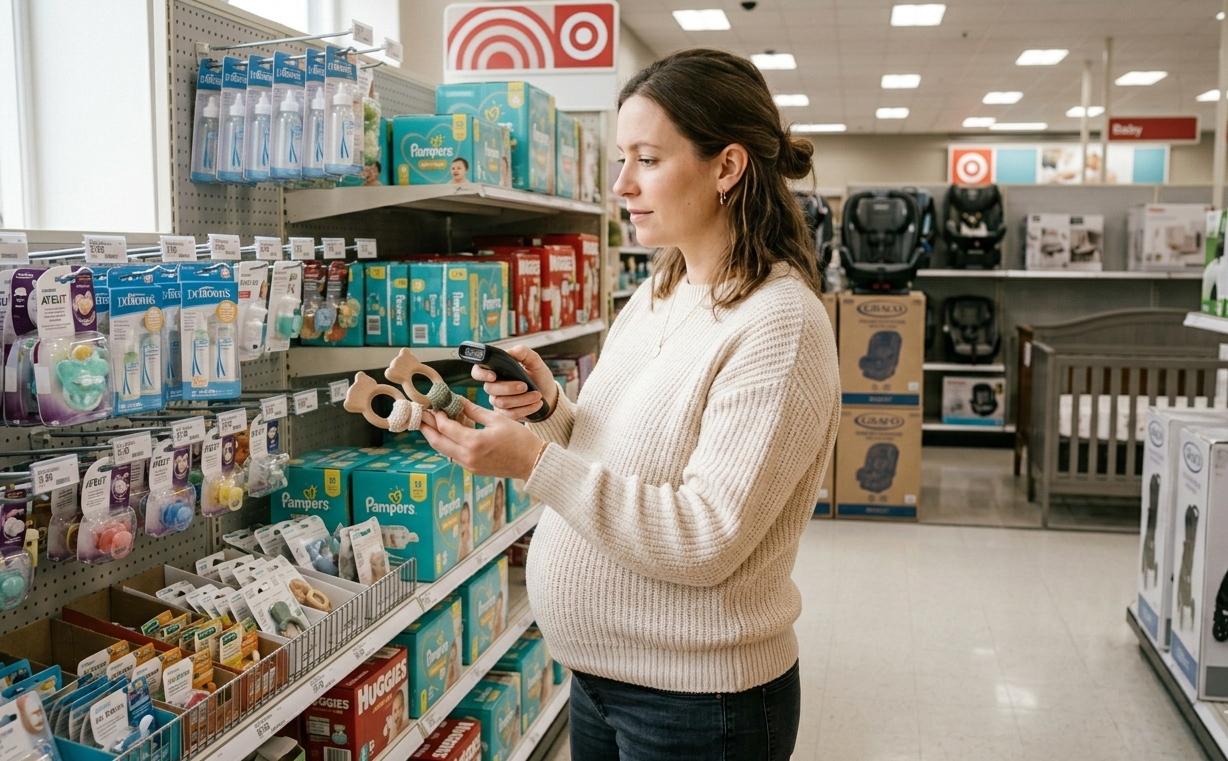
If your registry is through a store with a physical location, go in person and test things before you finalize anything. Push the stroller through the store, open and close it one-handed, and check that two car seats fit in your actual car. It is the only way to know what is going to work when you are tired and your hands are full, which is the state you will be in most of the time.
Getting the sleep side of things figured out matters just as much as the gear. The registry gets them home; the rest of the plan gets you through the first few months.
Sources
- Moon RY, Carlin RF, Hand I, et al. “Sleep-Related Infant Deaths: Updated 2022 Recommendations for Reducing Infant Deaths in the Sleep Environment.” Pediatrics. 2022;150(1):e2022057990. https://publications.aap.org/pediatrics/article/150/1/e2022057990/188304/Sleep-Related-Infant-Deaths-Updated-2022
- Blondel B, Macfarlane A, Gissler M, et al. “Preterm birth and multiple pregnancy in European countries participating in the EURO-PERISTAT survey.” BJOG. 2006;113(5):528-35. See also: twin preterm data via CDC National Vital Statistics Reports 2023. https://www.cdc.gov/nchs/data/nvsr/nvsr74/nvsr74-1.pdf