No. Opposite-sex twins are almost always fraternal, not identical. That’s the short answer, and it follows directly from how identical twins form: one fertilized egg splits into two embryos, both carrying the same chromosomes. Two different chromosomal sexes requires two different eggs.
That much is settled, but the questions twin parents actually run into aren’t always this simple. If you’re expecting boy-girl twins, the question may be settled before you even asked it. But if you have same-sex twins, the chromosomes story has a twist worth knowing. The same biology that makes opposite-sex identical twins nearly impossible is also what causes some twin families to walk away from the ultrasound with the wrong answer about their own twins.
A note on language: this article discusses chromosomal and biological sex: the XX/XY genetics established at fertilization and the developmental process that follows. “Gender” in everyday usage often refers to identity and social role, which is a separate topic. The two are related but distinct, and the science here is specifically about chromosomes and sex development.
Why Identical Twins Are Almost Always the Same Sex
Two pieces of biology explain this: how chromosomal sex is determined, and how identical twins form. The second part is where most people’s assumptions go sideways.
Chromosomal sex is established at the moment of fertilization. Eggs almost always carry an X chromosome. Sperm carry either an X or a Y. When the two meet, the chromosomal combination typically determines sex: XX is associated with female-typical development and XY with male-typical development. That determination is encoded in a single fertilized cell, the zygote, along with all the other chromosomes.
Identical twins, or monozygotic twins, form when that single zygote splits into two embryos early in development. Most splitting occurs within the first 13 days after fertilization. One egg. One sperm. One initial cell. When it divides into two, both embryos receive a copy of all the chromosomes, including the sex chromosomes.
If the zygote was XX, both twins are typically XX. If it was XY, both are typically XY. The split itself does not reassign sex chromosomes between the two embryos. Rare exceptions arise from chromosomal events that happen after the split.
Fraternal twins work on entirely different terms. Two eggs, released in the same cycle, each fertilized by a separate sperm. Each has its own genetic combination. One can land XX, the other XY, which is how you get opposite-sex twins. This is why opposite-sex twins are almost always fraternal. The biology that produces them is fundamentally different from the biology that produces identical twins.
The Rare Exceptions: When Something Goes Wrong After the Split
That “almost always” is doing real work. There are documented cases in the medical literature of monozygotic twins born with different chromosomal sexes. They arise from two distinct mechanisms.
The first involves post-zygotic chromosomal errors during the earliest cell divisions after splitting. Two processes can cause this: anaphase lag, in which a chromosome is lost when it fails to move correctly during division, and mitotic nondisjunction, in which chromosomes fail to segregate properly. These are related but distinct processes. When either affects a sex chromosome early enough in development, the two embryos can end up with different chromosomal configurations.
The best-described pattern involves an XY zygote. During an early cell division, the Y chromosome is lost from one cell line, leaving it with 45 chromosomes and a single X, written as 45,X. The embryo that develops from those cells is genetically female, but with Turner syndrome. The other twin, whose cells retained the full XY combination, develops as a male.
Case reports in the Journal of Medical Genetics (1966 and 1976) describe monozygotic twins where one was an XY male and the other had 45,X with Turner syndrome characteristics. A 2002 paper in Prenatal Diagnosis documented a similar case identified before birth. These cases span decades of published literature and are not theoretical.
Turner syndrome affects approximately 1 in 2,000 to 2,500 female births according to NIH sources. It can involve shorter stature, heart and kidney differences, and typically infertility. The female twin in these cases is not simply a typical girl who happened to develop from the same egg as her brother. She has a chromosomal condition that resulted from the same error that made them different sexes.
The second mechanism involves discordant sex development despite a shared karyotype. In some documented cases, both twins carry an XY chromosomal pattern but one develops with female-typical anatomy because of a mutation affecting sex-determining genes. The SRY gene on the Y chromosome functions as the trigger for male-typical development. When it fails or is absent, an XY individual can develop along a female pathway. A case report in Cytogenetics and Cell Genetics (PMID 11173871) describes monozygotic twins with discordant sex phenotypes despite both carrying a 46,XY karyotype.
Across more than five decades of published medical literature, these cases appear in multiple case reports and small series. They are real, carefully documented, and extraordinarily rare.
So: if you have opposite-sex twins with no known chromosomal or sex development condition in either child, your twins are almost certainly fraternal. The documented exceptions involve specific medical conditions, not a normal biological variation. One fertilized egg means one chromosomal sex, copied twice. If two different sexes came out through a typical developmental pathway, two eggs were involved.
The Part That Actually Matters for Twin Parents
Here is where things get practically important for families with same-sex twins, and where a lot of misinformation does real harm.
The answer to “can identical twins be different sexes?” is almost always no. But the follow-on question, the one that gets less attention, is this: can same-sex twins be wrongly identified as fraternal when they’re actually identical? The answer to that is yes, and it happens far more often than it should.
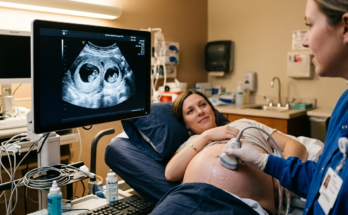
The misidentification comes from how chorionicity gets used as a proxy for zygosity. Chorionicity refers to the number of placentas. Identical twins often share a placenta (monochorionic). Fraternal twins always have two separate placentas (dichorionic). A lot of families, and even some clinicians, reason backward from that pattern: two placentas means fraternal, one shared placenta means identical.
The problem is that about 20 to 35% of identical twins are dichorionic-diamniotic. They split early enough after fertilization that each embryo developed its own separate placenta. On ultrasound, they look indistinguishable from fraternal twins. When those twins are also the same sex, there is nothing visible on any prenatal scan that separates them from same-sex fraternal twins.
Research and twin registries estimate that a substantial share of monozygotic twins with dichorionic placentation are labeled dizygotic at birth in clinical settings. It’s not a trivial error.
People asked me whether my daughters were identical constantly. They were not. They’re fraternal, noticeably different in appearance by the time they were toddlers. But many same-sex twins get the opposite: told definitively they’re fraternal based on the placenta finding, when the actual answer was never confirmed at all.
When Doctors Get This Wrong
I want to say something about this directly, because it surprised me when I first looked into it.
The misconception about chorionicity and zygosity is not limited to parents. It shows up in clinical settings too. Some parents of same-sex di-di twins have been told by obstetricians, nurses, or pediatricians that their twins are definitely fraternal based on the two-placenta finding. That statement is not accurate. It’s a reasonable heuristic (most di-di twins are fraternal), but it should be offered as a probability, not a certainty. The ones to watch for are same-sex twins with two placentas who have never been DNA tested.
If you were told definitively at birth that your same-sex twins are fraternal because of the placenta situation, and you have never had a DNA test, it is worth knowing that the determination was not actually definitive.
The Only Reliable Answer Is a DNA Test
If you have same-sex twins and you’ve never had a DNA test, here is what I’d want you to know about getting an actual answer.
Ultrasound chorionicity assessment is not a zygosity test. Looking at how similar the twins look is not a zygosity test. Neither is blood typing, which can only confirm fraternal if blood types differ but cannot confirm identical if they match.
The definitive method is a DNA zygosity test using STR or SNP marker analysis. Clinical and commercial labs compare multiple genetic markers from both twins. Most commercial labs offer a cheek-swab kit with no blood draw or doctor visit required. You swab the inside of each twin’s cheek, send the samples back by mail, and receive results within a few weeks. Clinical STR and SNP panels typically yield greater than 99% to 99.9% probability of correct zygosity assignment, depending on the marker panel used. Prices vary by provider; as a rough guide, many commercial tests have run in the range of $100 to $200, though it’s worth checking current pricing directly with labs.
The results have real-world implications beyond the answer to a lifelong family question. Identical twins are a perfect genetic match for organ donation; fraternal twins are not. If one identical twin develops a heritable condition, the other twin is substantially more likely to carry the same genetic variant. Genetic counseling, cancer screening decisions, and the interpretation of shared health histories all work differently depending on zygosity. None of this is urgent for most families, but it’s worth knowing.
Putting It Together
Opposite-sex twins are almost always fraternal. That holds across typical developmental pathways, with the only exceptions being documented chromosomal conditions or rare differences of sex development affecting one or both twins.
Same-sex twins may or may not be identical, and the ultrasound finding of two separate placentas does not answer that question as definitively as you might have been told.
If you want to understand more about how doctors actually determine whether twins are identical or fraternal, including the limitations of chorionicity testing and what a DNA test actually measures, that is worth reading before you decide whether to test. The science on this is clear. Getting the right answer just takes asking the right question.
Sources
- Monozygotic twins of opposite sex. Cytogenetics and Cell Genetics, 2000. PubMed 11173871
- Monozygotic twins of different sex. Journal of Medical Genetics, 1966. PMC1012913
- Monozygotic twins discordant for sex. Journal of Medical Genetics, 1976. PMC1013354
- Monozygotic twins discordant for Ullrich-Turner syndrome. American Journal of Medical Genetics, 1982. Wiley 10.1002/ajmg.1320130407
- Prenatal diagnosis of female monozygotic twins discordant for Turner syndrome. Prenatal Diagnosis, 2002. PubMed 12210579
- SRY gene. MedlinePlus Genetics, NIH. medlineplus.gov
- Diagnosing zygosity in infant twins: physical similarity, genotyping, and chorionicity. Twin Research and Human Genetics, 2004. PubMed 14965457
- Minnesota Center for Twin and Family Research, Twin FAQ. mctfr.psych.umn.edu
- Twin chorionicity and zygosity both vary with maternal age. Prenatal Diagnosis, 2021. PMC8916645